
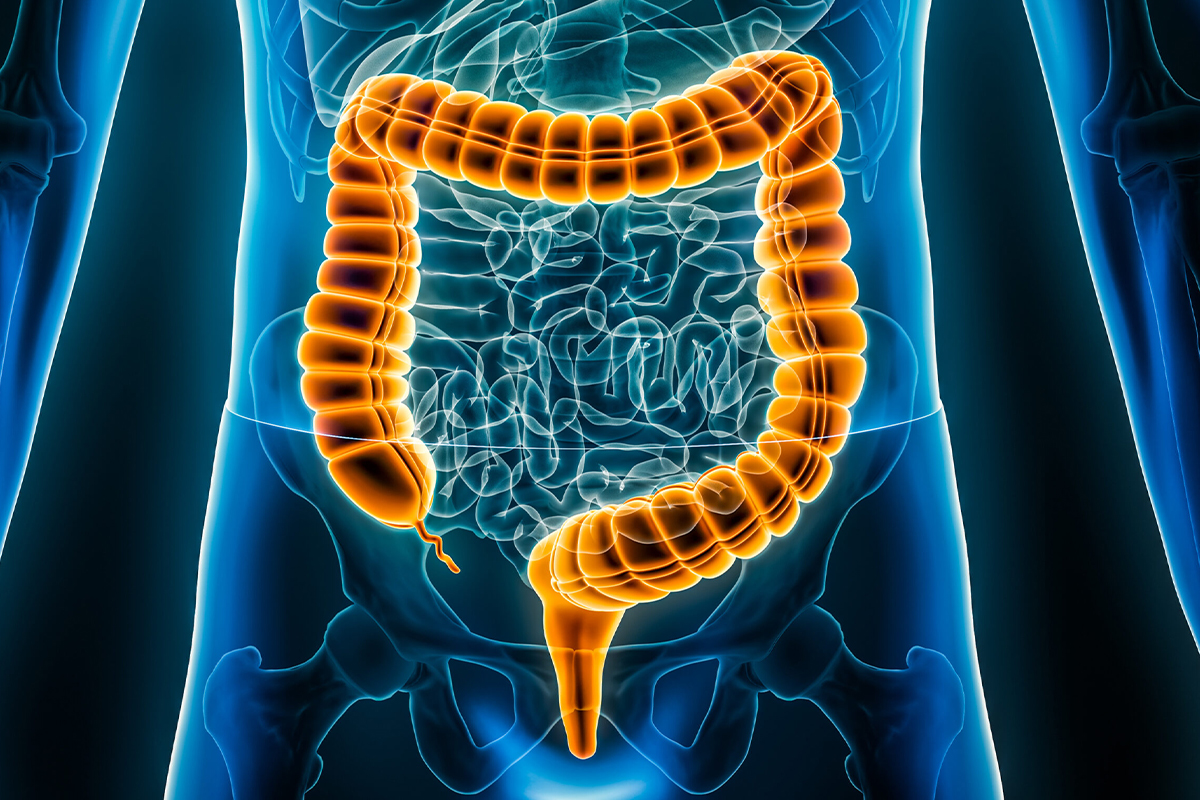
What is Faecal Microbiota Transplantation (Stool Transplant, Fecal Transplant)?
Faecal Microbiota Transplantation (FMT), known by its short name FMT in international literature, also commonly referred to as ”Stool Transplant” or ‘‘Fecal Transplant”, is a procedure in which the transplant material obtained by processing the feces taken from a healthy donor with high biodiversity is transferred to the patient’s large intestine.
Why Is FMT Treatment Needed?
In certain parts of the human body, we live in peace, harmony, and balance with trillions of single-celled organisms that live with us, do not harm us, also produce benefits, form the most important antimicrobial defense line of the region they inhabit, enable digestion of nutrients through their enzymatic functions, contribute to the acidity and moisture of their region, provide synthesis of vital structures (vitamins, neurotransmitters, etc.), contribute to the formation and protection of mucus structure in their region, continuously renew themselves, have very rapid reproduction capability, have lifespans limited to hours, consist of thousands of varieties, mostly bacteria, viruses, and yeasts. All these single-celled organisms are called FLORA. It is not possible for us to live without our flora. Humans see themselves as rulers of the Earth, but they are not aware that they depend on even single-celled microbes as long as things go well in the life cycle.
FLORA is named according to the region where it is located as colon (LARGE INTESTINE) flora, oral flora, external ear canal flora, genital area flora, skin flora.
FMT treatment is needed for the healing of diseases that occur as a result of decreased biodiversity in our COLON flora.
In the digestive system, flora elements that have completed their lifespan naturally progress and are stored in the rectum, the last part of the large intestine, and are expelled through the anal route. Flora members with very short life cycles continuously renew themselves. 70% of STOOL volume consists of dead and living flora waste.
How Does Flora Form?
Starting from the processes experienced before birth, how the birth occurred, how many weeks the person was born at, birth weight, how long and sufficiently they received breast milk, nutritional adequacy, diseases experienced, the number of people in their immediate environment, the flora biodiversity of people in their close environment, the healthiness of the environment they live in, etc., are determining factors in the formation of human flora. Because we acquire our flora from the environment we come into contact with.
How Does Colon Flora Get Damaged?
Due to factors such as long-term antibiotic use, nutritional deficiency, eating disorders, inadequate access to water and food in hygienic conditions, surgical interventions (especially digestive system surgery), inability to eat orally for a long time (coma processes, intensive care treatments, death fasts, hunger strikes, etc.), cancer treatments (chemotherapy, radiotherapy), pesticide residues used in agricultural production, consumption of GMO products, long-term debilitating infectious diseases (sepsis, hospital infections, pneumonia, meningitis, dysentery, cholera, etc.), chronic diarrhea, use of industrial food products, etc., there may be a decrease in biodiversity and disturbances in the configuration of our large intestine flora.
What Diseases Occur When Colon Flora Is Damaged?
In people whose Colon Flora has decreased in mass and number, the place of the lost flora is invaded by either other flora members or pathogenic (disease-causing) microorganisms. Accordingly, intestinal motility disorders (IBS, diarrhea, constipation, excessive gas), digestive disorders (Celiac Disease, etc.), malabsorption disorders, diseases related to intestinal surface damage (Ulcerative Colitis, Crohn’s Disease) occur. One of the most important factors in the formation of obesity is the dominance of carbohydrate flora. You often hear around you ”I can’t feel full without eating bread” or ”I can’t feel full without eating sweets”. These words are completely true and indicate that carbohydrate flora is dominant in that person. With the deterioration of flora, more than one of these diseases and complaints can be seen in the same person.
Who Needs FMT Treatment?
FMT treatment is effective in patients with the above-mentioned diseases that develop due to colon flora damage. FMT can be performed to strengthen immunity in patients with immune system-related diseases. FMT is applied in Clostridium Difficile treatment. There are many studies showing that FMT treatment is effective in Obesity, Food Allergy, Autism, Alzheimer’s Disease, and autoimmune diseases.
What Is the Purpose of FMT Treatment?
The purpose of FMT treatment is to restore the damaged flora. If the colon flora can be restored with sufficient biodiversity, diseases caused by colon flora damage can be treated.
Can FMT Be Applied to Every Patient Who Needs It?
FMT can be applied to every patient who does not have active bleeding in the colon and whose colonoscopy conditions are suitable for FMT.
Is There an Age Limit for FMT Treatment?
There is no age limit for FMT treatment.
Who Cannot Receive FMT Treatment?
FMT cannot be performed in cases defined as ”ILEUS” where there is no intestinal movement, in those with active colonic bleeding, and in sepsis and coma conditions.
Is FMT Treatment a Difficult Procedure?
FMT is not a difficult procedure. Its preparations, preparation of transfer material, and deciding to perform the procedure on the right person at the right time require serious experience.
How Is Donor Selection Done in FMT Treatment?
In FMT treatment, donor selection is made according to the criteria in the tables below. (Please see Table 1 and Table 2 below). As can be seen in the tables, the most important factors are that the donor is healthy, does not carry any contagious disease risk, is naturally fed, and has received sufficient breast milk.
How Many Sessions of FMT Treatment Are Performed?
At least one session is applied. However, the ideal is five sessions with one-week intervals.
When Does the Effect Start to Be Seen After FMT Treatment?
The effect starts within hours after FMT. Optimal effectiveness appears in 3 weeks.
Should the Donor Be of the Same Gender in FMT Treatment?
No. The donor does not need to be of the same gender as the patient.
Should the Donor Be From Close Relatives in FMT Treatment?
No. Genetic relationship between donor and patient is not required.
Should the Donor and Patient Be of the Same Blood Type in FMT Treatment?
No. The donor and patient do not need to be of the same blood type.
How Many Donors Should Be Used for FMT?
Since the purpose of FMT treatment is to increase biodiversity, the more donors used, the greater the FMT effectiveness and success.
How Many Types of FMT Are There According to the Transplant Material Used?
- FMT performed without waiting after the stool is taken from the donor (Real Time FMT)
- FMT performed using frozen stored material (Frozen FMT)
- FMT taken orally prepared in capsule form (Capsule FMT)
Which Type of Transplant Material Is Used for the Most Effective FMT?
The most effective FMT type is ”Real Time FMT’. Because what is intended to be transferred with FMT are live flora samples. The chance of live flora surviving and attaching in the colon is highest with ”Real Time FMT’. The success rate in Frozen FMT is lower. Capsule FMT has the lowest success rate among these.
How Many Types of FMT Are There According to Application Methods?
- FMT application in the form of enema (Rectal enema)
- Endoscopic FMT application
- Colonoscopic FMT application
- Combined endoscopic and colonoscopic FMT application (The application with the highest success rate)
- Capsule FMT
What Is Donor Safety in FMT?
In donor selection, preliminary donor candidates are determined according to Table 1 and 2 criteria. Then, the preliminary candidates undergo general examination and questioning. If there is no problem here, a series of blood, stool, and urine tests are performed. If there is no problem here either, they are accepted as donors.
If donors are not adequately examined, there is a risk of transmission of some diseases from donor to patient. First of all, the donor’s lifestyle and background must be well known. The main purpose of this questioning and examinations is to identify donor candidates with high biodiversity.
Are There Complications of FMT Application?
Every treatment can carry certain risks. When deciding on treatment, a benefit-risk calculation is made. If the benefit to be obtained is higher, the treatment is performed. Complications that may be encountered in FMT treatment:
- Fever
- Abdominal pain
- Sepsis (general infection)
- Complications related to colonoscopy application (bleeding, perforation, etc.)
- Disease transmission
Complications that may occur due to colonoscopy are directly proportional to the team’s experience. Other complications can also be seen very rarely if patient selection is done appropriately.
How Is Endoscopic and Colonoscopic FMT Performed?
Both applications are performed in the hospital, under operating room conditions, after the necessary bowel cleansing, under anesthesia. During this time, the patient does not feel anything.
How Long Does Endoscopic and Colonoscopic FMT Application Take?
Each procedure takes an average of 15-20 minutes to perform. Patients are discharged 2 hours after the procedure and return to their daily lives. FMT application does not require hospitalization.
Is It Necessary to Stay in the Hospital Before and After FMT?
No.
Does FMT Make Our Existing Disease Worse?
No.
What Is Capsule FMT?
It is the process of processing the stool taken from the donor and placing it in a capsule, and the patient taking the fecal content orally.
What Is Frozen FMT?
It is the preservation of the stool sample taken from the donor by freezing at -40 0C. FMT is performed using frozen material when needed.
What Is Live (Real Time) FMT?
It is the FMT application performed by preparing the stool taken from the donor without any waiting.
Assoc. Prof. Dr. Murat Kanliöz
General Surgery Specialist
Table 1: Exclusion Criteria in Donor Selection
|
Criteria for the Last Three Months |
Criteria for the Last Six Months |
Time-Independent Criteria |
|
-Those hospitalized -Those receiving intravenous treatment -Those who received live vaccines -Those using antibiotics -Those using antifungals -Those who received parasite treatment -Those using antivirals -Those who received dental treatment -Those who underwent surgical intervention -Those with animal bite history -Those with open wounds -Those with diarrhea -Suspicious sexual intercourse -Those with active infection -Those who gave birth -Travel to risky areas
|
-Chemotherapy
-Radiotherapy -Hormone therapy -Immunosuppressive treatment -Intensive care treatment -Oral STOP exceeding 7 days -Major surgical intervention -Blood transfusion -Those who had HAV infection -Contact with agricultural chemicals |
-Being an HIV infection carrier (AIDS Disease) -Being a Hepatitis B infection carrier -Being a Hepatitis C infection carrier -Those with Chronic Infectious Disease -Those thinner than BMI: 20 kg/m2 -Those heavier than BMI: 30 kg/m2 -Diabetic Patients Using Insulin -Those with Autoimmune Disease -Ulcerative Colitis Patients -Crohn’s Patients -Celiac Patients -Those with Lactose Intolerance -Those Diagnosed with Digestive System Cancer -Those Who Had Digestive System Surgery (Except Appendectomy) -Those who received less than 6 months of breast milk -Those diagnosed with Leaky Gut Syndrome (LGS) -Drug addicts -Alcoholics -Healthcare workers -Sex workers -Homosexuals -Those over 50 years old -Schizophrenics -Autistics -Toxic industry workers -Pregnant women -Cessation of oral feeding for more than three weeks
|
(*Source: Kanlioz M, Ekici U, Ferhatoğlu MF. Total Gastrointestinal Flora Transplantation in the Treatment of Leaky Gut Syndrome and Flora Loss. Cureus. 2022 Nov 3;14(11):e31071. doi: 10.7759/cureus.)
Table 2: Donor Quality Scoring
| Criterion | Score | Donor Score | |||||||
| Age (years) | 0-20 years → 5 | 21-30 years→ 4 | 31-40 years→ 3 | 41-50 years→ 2 | 50+ years→ 1 | ||||
| Breast Milk (months) | 1-6 months↓→ 6 | 6 months↑ → 9 | 9 months↑→ 12 | 12 months↑→15 | 24 months↑→18 | ||||
| Place of Residence | Rural → 10 | City→ 3 | Metropolitan→ 0 | ||||||
| Chemotherapy | Did not receive → 10 | Received → 0 | |||||||
| Radiotherapy | Did not receive → 10 | Received → 0 | |||||||
| Hormone Therapy | Did not receive → 10 | Received → 0 | |||||||
| 3 Weeks↑ Antibiotic | Did not receive → 10 | Received → 0 | |||||||
| Immunosuppressive Treatment | Did not receive → 10 | Received → 0 | |||||||
| Cessation of Oral Feeding | Did not stop→ 10 | 7 days ↓ → 5 | 7+ → 0 | ||||||
| Intensive Care Treatment | Did not occur→ 10 | 7 days ↓ → 5 | 7+ → 0 | ||||||
| DM History | None → 10 | Prediabetes→ 3 | Diabetes → 0 | ||||||
| Allergic Disease | None → 5 | Present → 0 | |||||||
| Autoimmune Disease | None → 5 | Present → 0 | |||||||
| Autoimmune Disease in Family | None → 2 | Present → 0 | |||||||
| Industrial Food Consumption | None → 5 | Very little → 2 | Present → 0 | ||||||
| Dysentery History | None → 5 | 3≤ → 2 | 4≥ → 0 | ||||||
| Gastroenteritis History | None → 5 | 5≤ → 2 | 6≥ → 0 | ||||||
| GI Surgery | None → 10 | Present → 0 | |||||||
| Chronic Drug Use | None → 5 | Present → 0 | |||||||
| Eating Disorder | None → 10 | Present → 0 | |||||||
| Alcohol Use | None → 10 | Rarely→ 2 | Very often → 0 | ||||||
| Total Score: | |||||||||
| Donor Quality According to Score
*125 points and ↑: Ideal Donor *100-124 points: Very Good Donor *90-99 points: Good Donor *80-89 points: Acceptable Donor *70-79 points: Poor Quality Donor *69-↓ points: Very Poor Quality Donor |
Total Donor Score:
|
||||||||
(*Source: Kanlioz M, Ekici U, Ferhatoğlu MF. Total Gastrointestinal Flora Transplantation in the Treatment of Leaky Gut Syndrome and Flora Loss. Cureus. 2022 Nov 3;14(11):e31071. doi: 10.7759/cureus.)