
THE EFFECTS OF MICROBES ON CIVILIZATION AND HUMANITY
One of the most important factors shaping civilization, human health, quality of life, and life expectancy is the single-celled organisms we call “MICROBES.”
It is no coincidence that the American scientist Jared Diamond named his timeless work “Guns, Germs, and Steel.” The most important elements that have shaped and directed human history form the title of his book.
Throughout history, humanity has endured deeply painful experiences caused by microbial diseases. Among those that have left the most unforgettable marks are epidemics of plague, influenza, measles, leprosy, and tuberculosis. Humanity has suffered tremendous losses because of these microbial diseases. Consequently, MICROBES have become associated with harm in our subconscious, giving rise to the belief that they must be eliminated. Because of these subconscious associations, we assume that the healthiest environment is a microbe-free environment.
However, this is not the reality. Although our surroundings contain microbes capable of harming us, we also live in balance with microbes that do not harm us and are beneficial and indispensable to us.
Throughout history, plague epidemics have caused mass deaths in many regions. In the very recent past, the COVID-19 pandemic caused mass deaths worldwide, accompanied by numerous economic, political, and social problems. Just as the decisive role of microbes in our lives has been dramatic in the past, they will always retain the same potential in the future.
THE HISTORY OF THE IDENTIFICATION OF MICROORGANISMS
The first person to mention the existence of disease-causing microbes was the Turkish scientist “Akşemseddin,” who lived in the 15th century. Akşemseddin did not physically observe and identify microbes. However, in his book entitled The Substance of Life, he described microbes in precisely these words: “It is wrong to assume that diseases arise in people individually. Diseases spread through transmission from person to person. This transmission occurs through living seeds that are too small to be seen with the naked eye.”
The Dutch merchant and scientist Antonie van Leeuwenhoek, considered the founder of modern microbiology, was the first person to observe, describe, and draw microbes using a microscope he designed himself in 1670.
In 1860, the French scientist Louis Pasteur formulated the “Germ Theory,” stated that microbes cause infectious diseases, and developed the rabies vaccine.
The German scientist Robert Koch was the first to isolate the microbes responsible for tuberculosis and anthrax in a laboratory.
WHAT IS DISINFECTION?
Disinfection is the elimination, through chemical and physical methods, of harmful microbes in an environment that have the potential to cause disease.
WHAT IS STERILIZATION?
Sterilization is the process of eliminating all microbes in an environment, whether harmful, harmless, or beneficial, using physical and chemical methods.
INTO HOW MANY GROUPS CAN MICROBES BE CLASSIFIED?
Microbes are classified into four groups: bacteria, viruses, fungi, and protozoa.
WHAT ARE HARMFUL MICROBES?
Microorganisms with the potential to cause temporary or permanent harm to human health are called HARMFUL (pathogenic) MICROBES. Harmful microbes affect humans through biological, chemical, or physical mechanisms. The effects of microbes on our bodies may be acute (sudden and short-term), chronic (long-term), or subacute (a period between acute and chronic).
WHAT ARE BENEFICIAL MICROBES?
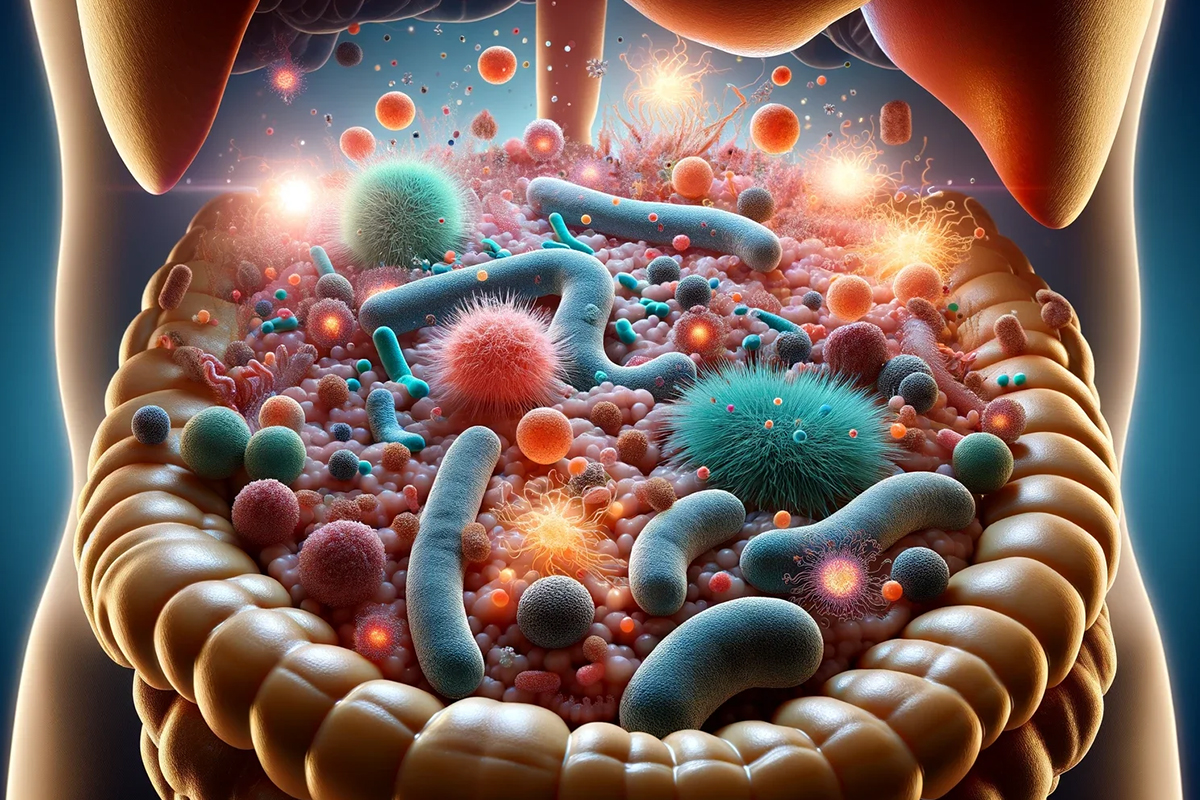
We define microbes that do not harm us, benefit us, live in a particular region of our bodies, continuously renew themselves, and whose absence causes loss of function and disease as beneficial microbes or members of healthy flora.
DISINFECTION OR STERILIZATION?
The answer to this question is, of course, disinfection. When cleaning in our daily lives, our goal should be disinfection. Sterilization is necessary only for instruments and materials used in surgical and interventional procedures. We assume that living in a microbe-free (sterile) environment would be better for us, but physiological reality is different. When we sterilize, we also eliminate the microbes that benefit us, causing serious harm to ourselves and our environment.
WHICH AREAS OF OUR BODY ARE STERILE?
Beneficial microorganisms live on our skin and in our genital region, eye sockets, upper respiratory tract, and digestive system, and their collective name is “FLORA.” These are the areas where we come into contact with the outside world. In these regions, we encounter pathogenic microbes alongside beneficial ones. The other areas of our bodies outside these regions, such as the cardiovascular system, central nervous system, and lymphatic system, are sterile (microbe-free). If the biodiversity of the flora living in the regions that harbor it is sufficient, incoming pathogens are largely neutralized by our flora and the other components of our immune system.
IS LIVING IN A STERILE ENVIRONMENT HEALTHY?
It is not possible to say that living in a completely sterile environment is the right approach. Living in a completely isolated and excessively clean environment, especially after birth, is an obstacle to the development of a person’s immunity. It is sufficient for the microbial flora around us to remain at a level that does not cause serious illness. By developing resistance to the microbes we encounter in our surroundings, we strengthen our immune system. The basic principle of protection through vaccination is to introduce our bodies to a microbe with a low potential to cause disease and ensure the formation of antibodies against it. Even when the microbes around us do not make us ill, contact with them increases our bodies’ resistance by stimulating the formation of antibodies against those microbes. When we contract a microbial disease and encounter the causative microbe for the first time, our immune system learns to develop resistance to that disease.
WHAT ARE FLORA MICROORGANISMS?
We call all the microorganisms that live with us, do not harm us, and benefit us MICROBIAL FLORA. FLORA is also named according to the region in which it is found, such as digestive tract flora, throat flora, or intestinal flora. Under normal conditions, each member of our flora does not live outside its own region and has functions specific to that region.
WHAT IS FLORA BIODIVERSITY?
The greater the biodiversity of our flora, the healthier the functions of the region in which it is found. A reduction in flora biodiversity leads to disruptions in the functions of the relevant region and, consequently, to diseases. Reduced biodiversity in intestinal microbial flora results in digestive disorders, damage to the lining of the digestive tract (erosion, gastritis, duodenitis, ulcers, etc.), leaky gut syndrome, SIBO, and autoimmune diseases. If we think of the digestive system as a factory, flora biodiversity can be compared to the breadth and richness of the factory’s pool of technical staff. A factory’s technical staffing capacity determines the quality of its production, and our digestive system can be understood in the same way.
HOW IS FLORA BIODIVERSITY ACQUIRED?
The process of acquiring flora begins at birth and reaches an optimal level between the ages of 18 and 25, but it continues throughout life. The more people with healthy flora we maintain prolonged contact with, the greater the biodiversity of our own flora.
HOW DO WE PROTECT OUR FLORA?
After the ages of 50–60, our flora begins to lose biodiversity as we age. Regardless of age, a healthy and balanced diet and avoiding physical, chemical, and biological pollution are important for protecting our flora. It is important to consume healthy, genetically unaltered foods and avoid agricultural chemicals. Uncontrolled medication use, particularly antibiotics, is a major factor that permanently disrupts flora biodiversity.
THE BENEFITS AND HARMS OF AGRICULTURAL CHEMICALS (PESTICIDES)
Pesticides not only disrupt soil and plant flora but also cause serious and permanent harm to those who consume agricultural products. In humans, pesticides cause allergies, poisoning, cancer over the long term, and permanent damage to the flora of our digestive system.
The benefit of pesticides is that they increase the quantity and quality of crops obtained per unit area by reducing populations of organisms that damage agricultural products. When agricultural products are consumed without being sufficiently cleared of pesticide residues, these pesticides harm the living beings, both humans and animals, that consume them.
THE EFFECTS OF ANTIBIOTICS ON OUR FLORA
With the worldwide introduction of antibiotics after 1950, deaths and disabilities caused by infectious diseases decreased significantly. The use of antibiotics has led to substantial increases in average human life expectancy.
However, antibiotic use seriously harms not only harmful pathogenic microbes but also indispensable members of our flora. Although this damage is often temporary, repeated, prolonged, and intensive antibiotic use causes permanent damage to the flora. The resulting reduction in biodiversity ultimately manifests as serious health problems, including digestive and absorption disorders, leaky gut syndrome, SIBO, food allergies, and autoimmune diseases.
Doç Dr Murat KANLIÖZ
General Surgery Specialist