
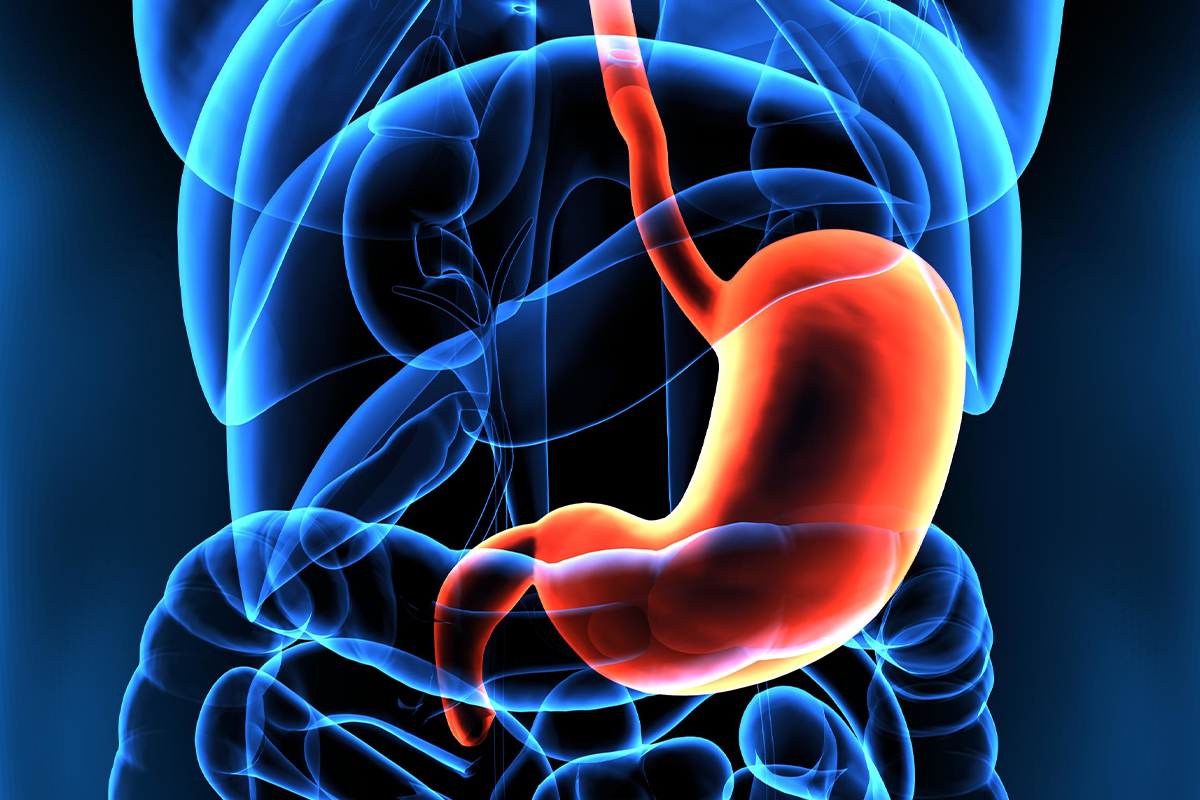
Before starting this story, it will be useful to make some definitions for readers to understand.
What is the Pylorus?
PYLORUS is the name given to the anatomical and functional structure that functions as a kind of “valve” consisting of muscle groups that control the stomach outlet.
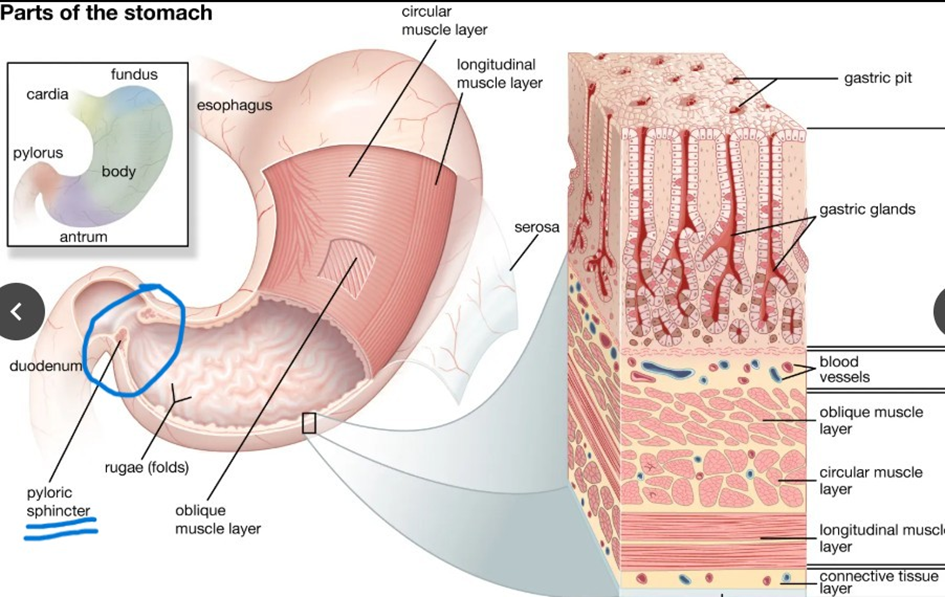
What is the Function of the Pylorus?
The stomach is a pre-storage and pre-digestion area for the food we eat. For the pre-digestion of the food we eat to take place, it needs to remain in the stomach for an average of 2 hours. The pylorus, as a mechanical and anatomical structure that controls stomach emptying, ensures the storage and controlled emptying of the stomach. After the food in the stomach undergoes mechanical and enzymatic digestion and pre-digestion is completed, approximately 50-75 cc of stomach content flows into the duodenum in a controlled manner at intervals of 3-5 minutes. This flow occurs with the contraction of the stomach and simultaneous opening of the pylorus. The realization of these functions is possible by having a functional PYLORUS.
What Does Functional PYLORUS Mean?
A pylorus that can perform the storage function of the stomach and prevent backflow from the duodenum to the stomach (alkaline reflux) is called “Functional Pylorus” or “Normotonic Pylorus”. If there is partial leakage in the pylorus, it is called “Hypotonic Pylorus”, and if it is completely non-functional, it is called “Atonic Pylorus”.
Why Did I Focus on Pyloric Function?
Some of our endoscopic obesity treatments performed by applying gastric balloon and gastric botox, and our surgical obesity treatments performed by applying sleeve gastrectomy and bypass were unsuccessful. In order to understand the reasons for treatment failure in patients with unsuccessful or insufficient results, we retrospectively examined patient records. In this retrospective review, we used the method of re-watching the endoscopic archive video recordings we made during or before applying procedures to patients. In the video recording examinations, we coincidentally noticed pyloric dysfunction in a significant portion of these patients. Upon this, we decided to investigate whether pyloric dysfunction could be a factor in unsuccessful treatments. However, our initial observational findings were supportive that this could be a factor. There was no information in the medical literature up to that day about the effect of pyloric function on obesity treatment. Patients with successful treatment were also taken into consideration for retrospective video recordings. In our examination, we saw that pyloric dysfunction was much less common in those with successful obesity treatment. As a result of the clinical research we conducted by deepening our study further, we concluded that pyloric function is an important determining factor in obesity treatment and we published these results in two separate articles in “Obesity Surgery” and “Surgical Laparoscopy Endoscopy & Percutaneous Techniques”, both of which are prestigious American medical journals in their field. You can access the publications from the links below.
https://link.springer.com/article/10.1007/s11695-020-04556-7
What Was Our Purpose in Performing Pyloric Revision?
The aim of gastric balloon, gastric botox and the “Kanlıöz Technique” applied to obese patients is primarily to extend the gastric emptying time. The feeling of satiety is basically realized through two mechanisms. One of these is the fullness of the stomach, the other is the increase in blood sugar. The main purpose of these treatments is to extend the satiety period as long as possible. By extending the gastric emptying time, longer-lasting satiety can be achieved. In those with pyloric dysfunction, since the gastric emptying time is very short, people get hungry at frequent intervals and obesity occurs due to higher food consumption.
In obesity treatment, whatever endoscopic or surgical treatment you perform, the adequacy of pyloric function is one of the most important factors determining treatment success.
Therefore, we developed the PYLORIC REVISION method after our experimental and clinical studies to extend the gastric emptying time in patients with atonic or hypotonic pyloric structure.
What is PYLORIC REVISION?
For patients with atonic or hypotonic pylorus, we called the process of narrowing the opening causing leakage in the pylorus and minimizing the leakage by filling around the pylorus endoscopically with injection method as PYLORIC REVISION.
In Which Other Diseases is PYLORIC REVISION Beneficial?
We had developed pyloric revision treatment while investigating why some of the treatments we applied to obesity patients were unsuccessful. However, in the following periods, apart from obesity, we started using it for the purpose of supporting Diabetes treatment and mainly in the treatment of “Alkaline Reflux Gastritis” and obtained very dramatically effective results. I published our experimental and clinical study results in the American medical journal called “Cureus”. You can access the article from the link below.
Gastric balloon and gastric botox as endoscopic obesity treatment are applied worldwide. We obtained much more effective results by applying these two methods simultaneously and since we performed the combined application of gastric balloon and gastric botox for the first time in the literature, we defined it as a third and new endoscopic obesity treatment and called this method the “KANLIÖZ TECHNIQUE”. We published the “KANLIÖZ TECHNIQUE” we defined in the American medical journal “Surgical Laparoscopy Endoscopy & Percutaneous Techniques” which publishes new technical studies in the field. You can access the article from the link below.
As a result of our clinical study results illuminating our path, we obtained results at least as effective as gastric balloon application by performing PYLORIC REVISION alone for obesity treatment in obese patients with pyloric dysfunction.
In the past, we brought the “KANLIÖZ TECHNIQUE” as the third and PYLORIC REVISION techniques as the fourth to the medical literature alongside the two methods applied as gastric balloon and gastric botox in the endoscopic treatment of obesity.
Mechanism of Action of Pyloric Revision in “Alkaline Reflux Gastritis”
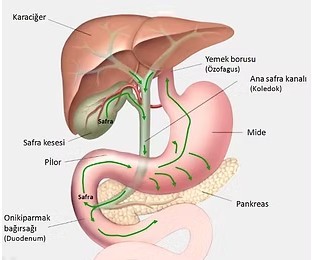
1500-2000 cc of bile is produced daily in the liver. The produced bile flows through the bile ducts to a place (duodenum) 10-12 cm beyond the stomach outlet (pylorus) (See Image 2). The produced bile does not flow directly to the duodenum, there is an intermediate storage and concentration station on this path and the name of this station is the “Gallbladder”. The bile stored concentrated at a 1/10 ratio in the gallbladder flows into the duodenum in the required amount and at the required time depending on the content of the food we eat, totaling 150-200 cc of concentrated bile per day. Since the place where the bile ducts open to the duodenum is very close to the pylorus, if the pyloric valve does not close sufficiently, some bile may leak back into the stomach. This leakage can be at acceptable limits in everyone, this is called physiological bile reflux. Physiological bile reflux may increase in certain situations but does not cause any permanent damage and complaints and does not require treatment. If the leakage causes permanent damage in the stomach and starts to impair quality of life, we call this condition “Alkaline Reflux Gastritis” disease. “Alkaline Reflux Gastritis” is a disease that needs to be treated. Drug therapy is attempted to reduce complaints. If drug therapy fails, the alternative treatment to be performed is surgery.
In people who have had their gallbladder removed (cholecystectomy) as a gallbladder operation, the storage function of the gallbladder is eliminated. While bile flow to the duodenum is controlled and 150-200 cc when needed when the gallbladder is present, in cholecystectomy patients, all produced bile flows uncontrollably to the duodenum regardless of need and at approximately 10 times the volume (1500-2000 cc) of those without cholecystectomy. Normally, in some people who do not have “Alkaline Reflux”, alkaline reflux may occur due to the overflow effect of increased bile volume.
Stones formed in the gallbladder can also trigger alkaline reflux by disrupting gallbladder function.
With the “Pyloric Revision” method we defined, bile backflow to the stomach is attempted to be minimized.
What is the Success Rate of Pyloric Revision Treatment in Alkaline Reflux Gastritis Treatment?
Pyloric Revision treatment is successful in approximately 80% of patients. It has no effect in 20% of patients. In the unsuccessful 20% group, it is evaluated that anatomical structural reasons, previous inflammations (gastritis, ulcer, etc.), and previous intra-abdominal surgeries (especially stomach, duodenum) are effective.
What is the Effectiveness Duration of Pyloric Revision Treatment in Alkaline Reflux Gastritis Treatment?
In our clinical study, during an average follow-up period of 32 months of 328 patients with successful Pyloric Revision procedure, it was observed endoscopically that the effectiveness of the Pyloric Revision procedure performed in 92% of the patients is still continuing and there is no bile backflow.
Is Pyloric Revision a Permanent Treatment?
I developed the Pyloric Revision method in 2018. We have been following up patients to whom we have actively applied the method since 2018. We were not able to call back the vast majority of them due to the distance of the places they live (patients coming from all over the world) and perform control endoscopy again. We have patients with the longest follow-up period of 7 years and their effectiveness is still continuing.
Is It Necessary to Have Pyloric Revision Done Continuously?
No, it is not necessary. We do not recommend reapplication to approximately 20% of patients who do not see any effect when first performed. However, if the effectiveness has partially or completely decreased after successful application, we perform reapplication.
Are There Any Side Effects of Repeating Pyloric Revision?
There are no side effects of reapplying Pyloric Revision.
Is There an Age Limit for Pyloric Revision?
The procedure is performed on patients over 18 years of age.
Who Cannot Have Pyloric Revision?
Pyloric Revision is not applied to patients with active gastric bleeding, active gastric infection, gastric ulcer in the procedure area, and gastric tumor detected during endoscopy.
Is PYLORIC REVISION Risky?
Pyloric Revision is not a risky procedure.
Why Should PYLORIC REVISION Be Preferred?
If we want to achieve effective results in obesity treatments, treatments we will perform without considering pyloric function will be incomplete, and it will be difficult to reach the desired result.
If there is diabetes and accompanying pyloric dysfunction, what should be done first should be to restore function to the pylorus.
The only cause of Alkaline Reflux Gastritis (Duodenogastric Reflux, Bile Reflux) formation is pyloric dysfunction. “Alkaline Reflux Gastritis” occurs after the leakage of duodenal content (especially bile) to the stomach due to pyloric dysfunction.
In all three cases, the main goal is to restore function to the pylorus. The easiest, cheapest, most harmless method and the one with no problem regarding repeated application as many times as desired is PYLORIC REVISION.
Does PYLORIC REVISION Have Advantages and Disadvantages Compared to Other Methods?
Pyloric Revision has no known disadvantages. However, it has many advantages:
- Applied quickly (15-30 minutes)
- Returns to daily life 2 hours after the procedure
- It is not a risky procedure
- It is much cheaper than other methods
- The procedure does not require general anesthesia
- Avoids the risk of surgical methods
- Eliminates lifelong medication use
- Eliminates lifelong dieting
Assoc. Prof. Dr. Murat KANLIÖZ